

Workshop Times
11:00am
- Play Is the Cure: Reconnecting Families Through Everyday Play and Routines, Dr. Roger Ball, PhD, LCSW, NYC Public Schools
- Building Resilient Brains: A Playful Approach to Understanding the Neuroscience of Childhood Adversity, Bijan Kimiagar, Founder & Principal, Aequa Strategies
- More. Free. Play: Why Children Need it and How We Can Support it. Dr. Cynthia Parson Puccio Sarah Lawrence College – Child Development Institute
- Supporting Adolescent Well-Being: How Connection, Play, Purpose, and Autonomy Protect Against Depression and Anxiety. Andrea Fallick, Director, School Based Services, Supervisor/Administrator, Student Assistance Services Corporation, Meredith Ohmes, LMHC, LPC, LPCS, Student Assistance Counselor at Student Assistance Services Corporation.
- Serious Fun: How Play Sparks Real Learning Alyssa Martin – Manager of Education & Programs, Westchester Children’s Museum
1:30pm
- The Lasting Legacy of Play and Art in Human Evolution, Lucy Barbera, PhD, LCAT Trauma- Informed Sandplay & Creative Art Therapy Certificate Programs -The Creative Art Therapy Studio
- The Power of Play in Professional Development, Valarie Nierman, Health Coordinator & Health Education Teacher Mahopac Central School District
- Adults Play Too: Reflecting on the Role and Importance of Play in the Lives of Adults, Kathryn (Kat) Litonjua, Chappaqua Friends Nursery School/Graduate of Sarah Lawrence College’s Child Development MA program
- Play’s the Thing: Community Adventure Play Experiences (CAPEs) for All Children, Tricia Hanley, Director and Joshua Leonard, Coordinator, Child Development Institute, Sarah Lawrence College
- The Importance of Creativity, Play, and Laughter for Youth and Families, Patrick Schelle (Adjunct Professor), CUNY Hunter, Silberman School of Social Work, Tangari Walker- Rennalls, LMSW, Jordan Alguero, LPN; Rudy Innocent, LMSW and ABA therapist at Comprehensive Counseling
Conference Workshops

Dr. Roger Ball, PhD, LCSW, MA, Supervisor of School Social Workers for the Bronx, NYC Public Schools
Dr. Roger Ball is an author, licensed clinical social worker, and nationally recognized speaker. He supervises school social workers in the Bronx, leads crisis response and trauma-informed initiatives, and teaches as an adjunct professor at Fordham University. His work focuses on the healing power of play, joy, and trauma recovery in families and communities.
Play Is the Cure: Reconnecting Families Through Everyday Play and Routines
This 90-minute interactive workshop explores how everyday play—reading together, cooking, pretend play, humor, creative projects, shared routines, and adult play—serves as a powerful antidote to screen time and digital overwhelm. Blending neuroscience, trauma-informed practice, and practical strategies, participants will learn how chronic screen exposure impacts attention, memory, and emotional regulation, and how engaging in play reactivates curiosity, bonding, and mental wellness. Hands-on activities, small-group exercises, and role-play allow attendees to explore culturally responsive play forms and learn to embed them into routines at home, school, and community settings.
Learning Outcomes:
- Understand how different forms of play, reading, cooking, free play, pretend play, collaborative projects, humor, movement, and adult play reduce stress and counteract excessive screen time.
- Learn how trauma disrupts the brain and how play restores emotional regulation, connection, and learning.
- Explore how family routines serve as protective structures supporting predictability, safety, and self-regulation.
- Identify culturally responsive ways families naturally incorporate play into daily life.
- Apply evidence-based strategies using joy, play, and relational moments to strengthen mental health.

Dr. Bijan Kimiagar, Founder & Principal, AEQUA Strategies
Dr. Bijan Kimiagar is a human rights advocate and mixed-methods researcher with 15+ years directing projects on child and family well-being in the US and internationally. As founder of AEQUA Strategies and faculty at Columbia University Mailman School of Public Health, he specializes in translating data from family-centered and community-based research and evaluation into actionable strategies that build a more equitable world.
A Playful Approach to Understanding Children’s Brain Development and How To Build Resilient Brains Through Social Connection, Not Screens.
In this interactive workshop, we will play the Brain Architecture Game to understand how toxic stress and negative factors—like excessive screentime—disrupt healthy brain development. The activity will also help us understand how protective factors—like play and social support from caregivers—buffer against the effects of toxic stress. Participants will work in small teams to build physical brain models using everyday objects. We'll use insights from the hands-on activity as a springboard for discussion as a larger group that Dr. Kimiagar will facilitate. Participants will leave the workshop with a stronger understanding of the neuroscience of adversity and opportunities during childhood, which they can leverage to strengthen and complement their own expertise and professional practice.
Learning Outcomes:
- Explain how adversity and toxic stress affect developing brain architecture during critical periods in childhood;
- Identify protective factors that buffer against adversity and promote resilience; and
- Apply these concepts to understanding how excessive screen time disrupts healthy brain development, as well as meaningful connections between children and caregivers, which can buffer against adversity.
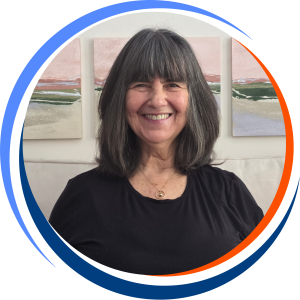
Lucy Barbera, PhD, LCAT, Trauma-Informed Sandplay & Creative Art Therapy Certificate Programs, The Creative Art Therapy Studio
Lucy Barbera, PhD, LCAT is a New York State Licensed Creative Arts Therapist, Art Teacher, and School District Administrator, whose work spans medical, psychiatric, and educational settings. For 23 years, Dr. Barbera served on the faculty of The Humanistic Multicultural Education Graduate Program, at the State University of New York (SUNY), at New Paltz, where she developed and taught courses in Expressive Arts in Education, In the Human Services, and in Social Justice Leadership. Currently, Dr. Barbera is facilitating the Trauma-Informed Sandplay & Creative Arts Therapy Certificate Programs for Mental Health Professionals & Educators, a post-graduate program offered by Antioch University.
The Lasting Legacy of Play and Art in Human Evolution
Research * on the history of play and art in human evolution indicates that arts evolved from PLAY and that both play and art evolved in humans as essential behaviors to help them survive. As they have done throughout time, play and art provide necessary tools for social and emotional survival because these creative activities allow us to transform life through the release of the imagination. Not only do play and art offer strong metaphorical meaning but play and art continue to have self-rewarding justifications found in the human connections they encourage, and, in this capacity, are leveraged for healing and "joining together", in community, and in life.
Utilizing theory, case study, and experiential processes, Dr. Barbera will introduce the roots of play and art, their legacy, utilization, and function. She will conclude with an exploration of the functions these allies still serve today, as catalysts for psychological, social, and emotional wellbeing, and as mitigators of collective and individual trauma, depression, anxiety, and isolation in the digital age, in their unique power to bring people together in beauty, joy, and hope.
*References: Dissanayake, Groos, Huizinga, Morris, Magsamen & Ross, et al.
Learning Outcomes:
- Understand the history, legacy, and function of play and art in human evolution.
- Learn how play and art support human connections, social and emotional well-being.
- Explore how play and art fortify therapeutic insights beyond verbal therapy.
- Identify ways play and art mitigate trauma, depression, anxiety, and isolation.

Dr. Cynthia Parson Puccio, Sarah Lawrence College Psychology Faculty
Dr. Cynthia Parson Puccio is a Developmental Psychologist, Clinical Social Worker, and Child Therapist. She is clinical faculty at Sarah Lawrence College and specializes in areas such as child-centered therapy and DIR/Floortime methods, sensory processing and regulation, and humor development. She also provides therapeutic support for families, children, and professionals in her mental health practice.
More. Free. Play: Why Children Need it and How We Can Support It
This presentation highlights the many benefits of free play for children, including emotional well-being, creativity, social problem-solving, executive functioning, and self-regulation. We will also take a close look at what free play can tell us about a child’s unique sensory processing profile. Participants will learn practical strategies to incorporate more free play and decrease screen time, promoting connection among children and families.
Learning Outcomes:
- Understand how free play differs from other forms of childhood play and activities
- Explore the research supporting the developmental benefits of free play.
- Learn how and why children are over-scheduled, overstimulated, and overwhelmed.
- Explore ideas and strategies to increase free play and reduce screen time (for parents and children).
- Understand how free play supports sensory processing and self-regulation.
- Learn about ways to support better “family mental health”
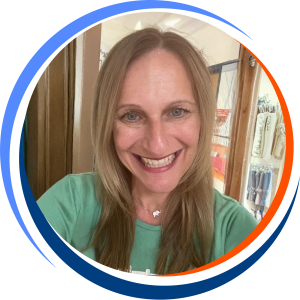
Valarie Nierman, Health Coordinator & Health Education Teacher, Mahopac Central School District
Val Nierman is K-12 Health Coordinator and Health Education Teacher in Mahopac, NY. She has 31 years of classroom teaching experience and professional development focused on equity, trauma-informed practices, and culturally responsive teaching.
The Power of Play in Professional Development
This workshop explores strategies for integrating movement, games, art, storytelling, and play into professional development. Participants will learn how play engages learning centers in the brain to improve retention and impact, while ensuring physical and emotional safety.
Learning Outcomes:
- Learn how movement, games, art, storytelling, and play stimulate learning in professional development.
- Acquire practical strategies for incorporating play into workshops.
- Learn flexible accommodations to ensure safety and engagement.

Andrea Fallick, LCSW, CASAC, CPP
Director of School Based Programs and Supervisor/Administrator, Student Assistance Counseling Center. She trains professionals nationally on adolescent mental health, substance use, and bullying prevention.
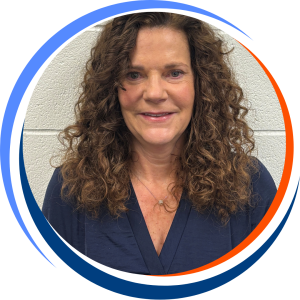
Meredith Ohmes, LMHC, LPC, LPCS is a Student Assistance Counselor with Student Assistance Services Corp.
She provides school-based substance use prevention and early intervention services in Briarcliff High School.
Supporting Adolescent Well-Being: How Connection, Play, Purpose, and Autonomy Protect Against Depression and Anxiety
Participants will explore adolescent brain development, mental health, and social media effects. Using interactive activities, the workshop demonstrates how connection, play, purpose, and autonomy buffers against depression and anxiety in teens.
Learning Outcomes:
- Distinguish between clinical depression/anxiety and normal adolescent mood swings.
- Understand four basic psychological needs of adolescents.
- Learn strategies to promote healthy development and social media use.
- Explore teen substance use impacts and online/offline balance.
- Apply experiential activities to enhance connection, play, and flow.

Tricia Hanley, Director, Sarah Lawrence College
Tricia Hanley holds a MSEd in Early Childhood Education and an MA in Child Development. She develops professional development, community outreach programs, and research related to children’s play.

Joshua Leonard, Coordinator, Child Development Institute, Sarah Lawrence College
Joshua Leonard holds a BFA and MFA and has experience in educational administration, program events, and speculative fiction instruction. He joined CDI in 2024.
Play’s the Thing: Community Adventure Play Experiences (CAPEs) for All Children
CAPE workshops demonstrate how children use loose parts and found materials to engage in imaginative, collaborative play. Participants explore theory, research, and practice through discussion and hands-on activities, fostering child-directed play across diverse settings.
Learning Outcomes:
- Understand the CAPE program.
- Revisit early play experiences.
- Discuss the value of child-directed, open-ended play.
- Explore loose parts play and collaborative problem-solving.
- Consider accessible play experiences for diverse communities.
- Learn to introduce CAPEs in schools, homes, and communities.
- Participate in hands-on play.
- Access CAPE Toolkit for organizations, parks, schools, families.

Kathryn (Kat) Litonjua, Chappaqua Friends Nursery School / Sarah Lawrence College Graduate
Kathryn Litonjua is an assistant teacher at a play-based preschool and a recent Sarah Lawrence College Child Development MA graduate. She has presented on play research at conferences and collaborates on longitudinal studies of children’s outdoor play.
Adults Play Too: Reflecting on the Role and Importance of Play in the Lives of Adults
Participants explore adult play through quizzes, reflection, and discussion. Hands-on activities allow attendees to connect their play style to personal and professional contexts. The workshop provides strategies for incorporating play into adult life.
Learning Outcomes:
- Take a play style quiz and learn about personal play style.
- Reflect on current and childhood play.
- Understand why adult play is important.
- Reframe play as a lifelong activity.
- Apply play insights to wider communities.

Alyssa Martin, Manager of Education & Programs, Westchester Children’s Museum
Alyssa Martin manages education and programs at Westchester Children’s Museum, developing hands-on learning experiences for over 10,000 students across field trips and community programs.
Serious Fun: How Play Sparks Real Learning
Play is one of the most effective ways children learn. In this workshop, participants will explore how children’s museums create welcoming, inclusive play spaces that support hands-on, informal learning for children and families. Participants will then take part in Mars Rovers, a no-tech coding and movement-based activity inspired by how scientists use robotic rovers to explore distant worlds. Working together as “Mission Control,” a “Computer Program,” and a “Rover,” participants will communicate, problem-solve, and complete challenges using their bodies, voices, and teamwork – no computer screens required.
Learning Outcomes:
- Explore how children’s museums provide welcoming play spaces.
- Participate in Mars Rovers, a no-tech coding activity.
- Learn how scientists use robotic rovers to explore distant worlds.
- Experience teamwork challenges as Mission Control, Computer Program, and Rover.

Patrick Schelle (Adjunct Professor), CUNY Hunter, Silberman School of Social Work,
Tangari Walker-Rennalls, LMSW
Jordan Alguero, LPN; Rudy Innocent, LMSW and ABA therapist at Comprehensive Counseling
Patrick Schelle, MSW, ABD is a seasoned social worker and educator working for over 15 years in NYC and Westchester. His experience in the community and working with youth has led him to pursue a PhD in Social Welfare. He is currently teaching Forensic Social Work topics at CUNY. Patrick’s dissertation is focused on how comic books can improve attitudes towards learning to read for justice impacted youth.
Tangari Walker-Rennalls, LMSW, has over 15 years of experience serving youth and families. She specializes in crisis stabilization, therapeutic recreation, program leadership, Medicaid billing, and staff development, and holds degrees from NYU and Mercy College with a post-masters certificate in Adaptive Leadership in Nonprofits.
Jordan Alguero, LPN, received a Bachelors of Science in Legal Studies in 2007. Early experiences working with youth were at Four Winds psychiatric hospital in various roles including activities specialist. The experiences inspired him to pursue a career in nursing. He completed his licensure for practical nursing in 2012 and has held various positions in wound care and dermatology. He has recently began pursuit of a Masters degree in Mental Health Counseling at Mercy College.
Rudy Innocent, LMSW, and ABA therapist at Comprehensive Counseling, is dedicated to fostering resilience and empowering clients across the lifespan. A CUNY, York College graduate with a Bachelor of Science (2022) and Master of Social Work (2023), Rudy integrates a comprehensive resiliency framework into his clinical practice, exploring how interpersonal dynamics, environments, and personal strengths shape the ability to adapt and thrive. As a PhD Student with CUNY, his current research explores the most effective resiliency interventions for cyberostracism among adolescents and emerging adults, addressing how digital exclusion impacts mental health in today’s virtual landscape.
The Importance of Creativity, Play, and Laughter for Youth and Families
Creativity, play, and laughter are essential to the healthy development and well-being of youth and families. Together, they support emotional growth, strengthen relationships, and build resilience, especially in times of stress or adversity. For youth- and family-serving systems, schools, courts, detention settings, community organizations—integrating creativity, play, and humor humanizes services and builds trust, supports trauma-informed and strengths-based approaches, enhances engagement and participation, and creates space for healing, learning, and growth. Overall, creativity, play, and laughter are not extras, they are fundamental tools for healthy development, connection, and resilience in youth, families, and youth systems.
Learning Outcomes:
This interactive workshop will explore the importance of creativity, play, and laughter for Youth:
- Emotional expression and regulation
- Cognitive and social development
- Identity and confidence building
- Stress relief and resilience
And the importance for Families:
- Strengthening relationships and attachment
- Improving communication
- Supporting family well-being
- Promoting equity and inclusion